



A gate that drags every time it opens. A handrail that feels loose. A fence section leaning after years of weather. A cracked bracket on a piece of ranch or commercial equipment.
At some point, every property owner, rancher, contractor, or facility manager has to ask the same question:
Should this be repaired, or is it time to replace it?
The answer depends on more than the visible damage. A professional welder looks at the condition of the base metal, the strength of the surrounding structure, how the piece is used, and whether a repair will actually hold up over time.
For homeowners, ranches, wineries, commercial properties, and agricultural operations throughout San Luis Obispo County, understanding the difference can save time, money, and frustration.
If you are dealing with a damaged gate, railing, fence, or equipment component, J&M Welding can inspect the problem and give you a straightforward recommendation: repair it if it makes sense, replace it if that is the safer long-term option.
Common Welding Repair Problems
Not all metal damage is the same. Some issues are simple repairs. Others are warning signs that the structure may be reaching the end of its useful life.
Gate Problems
Driveway gates, entry gates, ranch gates, and pedestrian gates are exposed to constant movement, weather, weight, and impact. Common issues include:
- Cracked or broken welds near hinges, latches, strike plates, and frame corners
- Sagging gates caused by worn hinges or shifting posts
- Bent gate frames from vehicle impact, wind, or heavy use
- Surface rust or corrosion
- Failed hinges, rollers, or latch hardware
- Gate posts that have moved, settled, or loosened at the base
In many cases, a gate can be repaired by rewelding joints, replacing hinges, reinforcing weak points, or fabricating new hardware. But if the frame is badly twisted, heavily corroded, or no longer square, replacement may be the smarter choice.
Have a gate that is dragging, sagging, or not closing right? Call J&M Welding at (805) 440-3161 for a professional gate repair assessment.
Fence and Railing Problems
Metal fences, handrails, guardrails, and stair railings are built for strength, but they still wear down over time.
Common problems include:
- Loose railing sections
- Cracked welds where rails meet posts
- Rusted or weakened posts
- Bent rails from impact
- Corrosion where water collects
- Failed connections at brackets or mounting plates
- Loose or unsafe stair handrails
Railings deserve special attention because they are often safety-related. A decorative fence rail may be a simple fix. A loose staircase handrail or guardrail needs to be evaluated more carefully because failure could lead to injury.
If a railing moves when you push on it, do not ignore it. J&M Welding provides railing repair and custom metal fabrication for homes, businesses, wineries, and commercial properties across the Central Coast.
Agricultural and Commercial Equipment Problems
For ranches, farms, vineyards, contractors, and commercial operations, broken metal components can stop work fast.
Common equipment repair issues include:
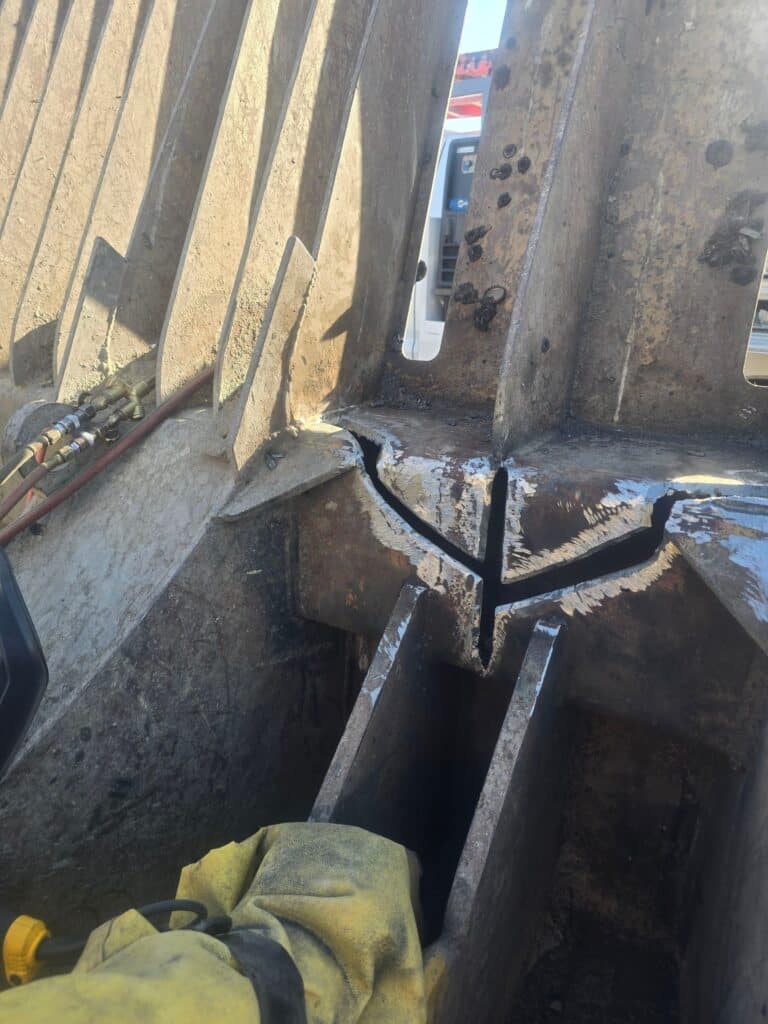
- Cracked brackets
- Broken mounts
- Damaged pivot points
- Fatigue cracks from repeated stress
- Bent or broken steel members
- Failed welds from previous repairs
- Corrosion in structural areas
- Worn or damaged attachment points
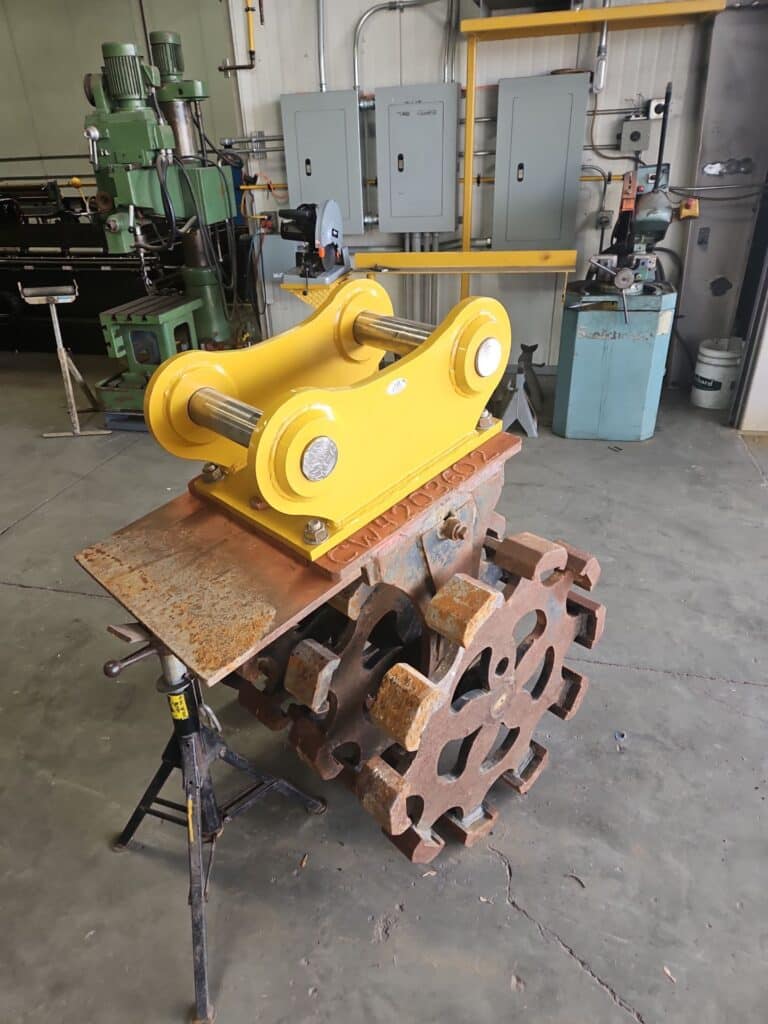
Many equipment repairs can be completed with mobile welding, depending on access, material condition, and safety requirements. In some cases, custom fabrication may be needed to replace a bracket, mount, guard, or support.
Downtime is expensive. If a broken weld or damaged component is slowing your operation down, contact J&M Welding for mobile welding and equipment repair in San Luis Obispo County.
How to Tell Whether Metal Should Be Repaired or Replaced
Before deciding, a welder will usually look at several key factors.
1. Is the Base Metal Still Sound?
A weld is only as strong as the metal around it. If the surrounding steel, iron, stainless steel, or aluminum is still solid, a repair may be effective.
Repair may be a good option when:
- Rust is mostly on the surface
- The surrounding metal is not deeply pitted
- The tubing, plate, or frame still has enough thickness
- Cracks are limited to a weld joint
- The structure has not lost its basic shape
Replacement may be better when:
- Rust has eaten through the material
- The metal is thin, brittle, or flaking
- The frame is severely bent or twisted
- Cracks have spread into the surrounding metal
- Multiple areas are failing at the same time
A quick visual inspection can help, but the final call should come from someone who understands structural welding and metal fatigue.
2. Is the Damage Localized or Widespread?
A single cracked weld is very different from an entire gate or railing system that is rusting out.
Localized damage is often repairable. Examples include:
- One broken hinge
- One cracked rail joint
- One bent bracket
- One damaged latch plate
- One failed weld on an otherwise solid frame
Widespread damage may point toward replacement. Examples include:
- Rust throughout the frame
- Multiple failed welds
- Several bent or weakened sections
- Posts and rails failing together
- Previous repairs failing again
Here is the practical rule: when damage is isolated, repair usually makes sense. When the whole system is deteriorating, replacement often provides better long-term value.
3. Is It a Safety-Critical Structure?
Some metalwork is mostly functional or decorative. Other metalwork protects people, animals, vehicles, or equipment.
Safety-critical items include:
- Stair handrails
- Guardrails
- Balcony railings
- Commercial railings
- Structural supports
- Livestock containment gates
- Equipment mounts under load
- Trailer or vehicle-related components
For these situations, the question is not simply, “Can it be welded?” The better question is, “Will the repaired structure be safe and reliable under real use?”
A responsible welding company will not recommend a repair that creates liability or gives you false confidence.
If safety is involved, get a professional opinion before using the structure again. J&M Welding can evaluate the damage and recommend the right next step.
When Welding Repair Usually Makes Sense
Repair is often the better choice when the damage is limited and the surrounding structure is still strong.
Common repair-friendly situations include:
- A gate hinge has cracked or broken loose
- A latch plate needs to be rewelded or replaced
- A railing has one loose joint
- A fence section has minor impact damage
- A bracket or mount has snapped off equipment
- A weld has cracked but the base metal is still solid
- A custom part can be reinforced instead of rebuilt
Welding repair can often extend the life of a gate, railing, fence, or equipment component without the time and expense of full replacement.
Not sure if your project is repairable? Send J&M Welding a photo or schedule an on-site assessment. A quick look from an experienced welder can save you from guessing.
When Replacement Is the Better Option
Replacement may be the right choice when a repair would only delay the inevitable.
A welder may recommend replacement when:
- The metal is too corroded to hold a reliable weld
- The frame is badly bent, twisted, or out of square
- Previous repairs have failed repeatedly
- Multiple sections are damaged
- The structure no longer meets safety expectations
- The existing design is too weak for how it is being used
- Matching or repairing old material would take more effort than fabricating new
This is especially true for gates, railings, and commercial metalwork that need to operate smoothly and safely every day.
Replacement also gives you the chance to improve the design. A new gate can be built stronger. A railing can be made safer. A piece of equipment can be reinforced to reduce future failures.
If replacement is the better long-term choice, J&M Welding can fabricate a custom solution built for your property, use case, and environment.
The Repair vs. Replacement Break-Even Point
Many customers want to know when repair stops making sense financially.
Instead of focusing on fixed price ranges, the better way to think about it is this:
If the repair is minor, localized, and restores full function, repair is usually worth considering. If the repair is extensive, temporary, or close to the effort of building new, replacement may be the better investment.
Factors that affect the repair-or-replace decision include:
- Material condition
- Size of the structure
- Type of metal
- Access to the damaged area
- Whether mobile welding is possible
- Amount of grinding, fitting, and finish work needed
- Hardware replacement needs
- Safety requirements
- Whether custom fabrication is required
- Long-term use and expected lifespan
A cheaper repair is not always the better deal if it fails again soon. On the other hand, replacing a solid structure because of one broken weld is usually unnecessary.
The right answer comes from looking at the actual metal, not guessing from a photo alone.
Timeline: Repair vs. Replacement
Repair work is usually faster than replacement because the existing structure remains in place and only the damaged area needs attention.
Welding Repairs
Simple repairs may be completed during a service visit when access is good and the metal is in repairable condition. More involved repairs may require extra preparation, reinforcement, custom brackets, or shop fabrication.
Examples include:
- Rewelding a cracked joint
- Repairing a broken hinge
- Reinforcing a weak gate frame
- Fixing a loose railing connection
- Fabricating a replacement bracket
- Repairing equipment damage on-site
Custom Replacement
Replacement usually takes longer because the project may involve measuring, material selection, fabrication, finish work, delivery, and installation.
Replacement may be the better route for:
- Custom driveway gates
- Entry gates
- Stair railings
- Commercial railings
- Structural metalwork
- Equipment guards or frames
- Custom brackets and supports
- Ornamental or architectural metalwork
Need the work done right, not just fast? J&M Welding provides practical repair options and custom fabrication for durable, long-lasting results.
What to Ask Before Approving a Welding Repair
Before moving forward, ask a few simple questions:
- Is the surrounding metal strong enough to hold the repair?
- Is this a temporary fix or a long-term solution?
- Does any hardware need to be replaced?
- Will the repaired area need reinforcement?
- Is the structure safe to keep using?
- Would replacement be a better value over time?
- Is surface finishing, paint, or coating needed afterward?
A good welder should be able to explain the recommendation clearly. You should not feel like you are being pushed into a repair that will not last or a replacement you do not need.
Why Work With a Local Welding and Fabrication Shop?
Metalwork on the Central Coast has to stand up to real conditions: ranch use, agricultural wear, coastal moisture, commercial traffic, winery operations, vehicle impact, weather, and daily use.
Working with a local welding company means you get someone who understands the environment, the common failure points, and the practical needs of properties in Paso Robles, Atascadero, Templeton, San Luis Obispo, and surrounding communities.
J&M Welding provides:
- Mobile welding
- Gate repair
- Gate fabrication
- Railing repair
- Custom handrails
- Fence and rail welding
- Equipment repair
- Custom metal fabrication
- Structural welding
- Commercial and agricultural welding services
Whether you need a quick repair or a fully custom replacement, the goal is the same: strong, clean, reliable metalwork that holds up.
Repair or Replace? Get a Straight Answer From J&M Welding
You do not need to guess whether your gate, railing, fence, or equipment should be repaired or replaced.
J&M Welding can inspect the damage, explain your options, and recommend the most practical solution for your property or business.
Call or text J&M Welding today at (805) 440-3161 to schedule a welding repair assessment.
You can also request service online at:
Serving Paso Robles, Atascadero, Templeton, San Luis Obispo, and surrounding areas throughout San Luis Obispo County.