




A steel entry gate can be a simple “keep the dog in” upgrade—or it can be a full security system with access control, safety sensors, and finishes built to survive sun, dust, and vineyard life. In Paso Robles, where you’ve got everything from suburban HOAs to rural driveways that feel like a scenic movie set, the best gate is the one that’s designed for the property you actually have (not the one in a showroom photo).
This guide covers the big decisions that make or break a gate project: swing vs. slide, hinge loads, operator selection, access control, powder coat, maintenance, and how to move from CAD to install without the usual “surprise—your driveway is a potato chip” moment.
Why custom steel gates are worth it
Security + control: A real barrier beats a sign that says “No Trespassing” (shocking, I know).
Curb appeal: A gate is the first “handshake” your property gives visitors.
Durability: Properly built steel gates outlast wood and many prefab options, especially with a quality finish.
Fit: Custom means the gate matches your opening, slope, wind exposure, and operator needs.
If you’re targeting custom metal gates Paso Robles, the keywords people actually care about are: “will it work every day,” “will it sag,” and “how much maintenance am I signing up for?”
Get a Quote for a Custom Steel Gate
Tell us your opening width, driveway slope, and whether you want swing or slide. We’ll recommend the right setup.
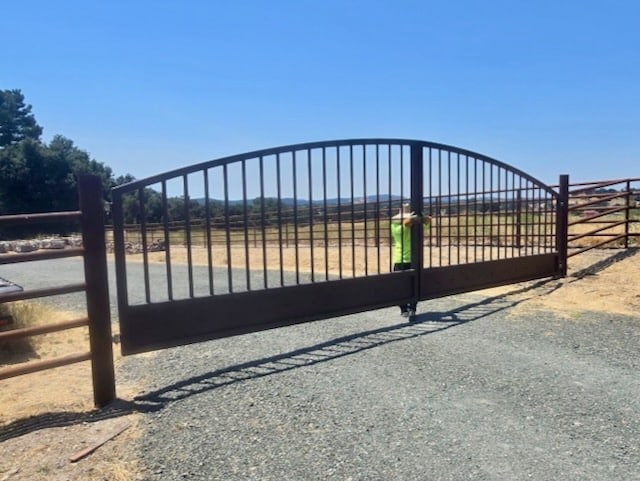


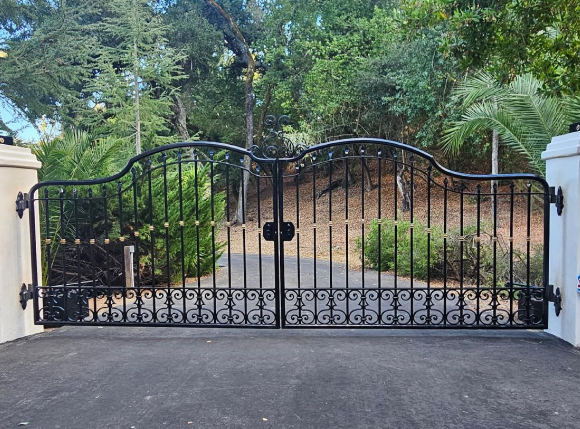
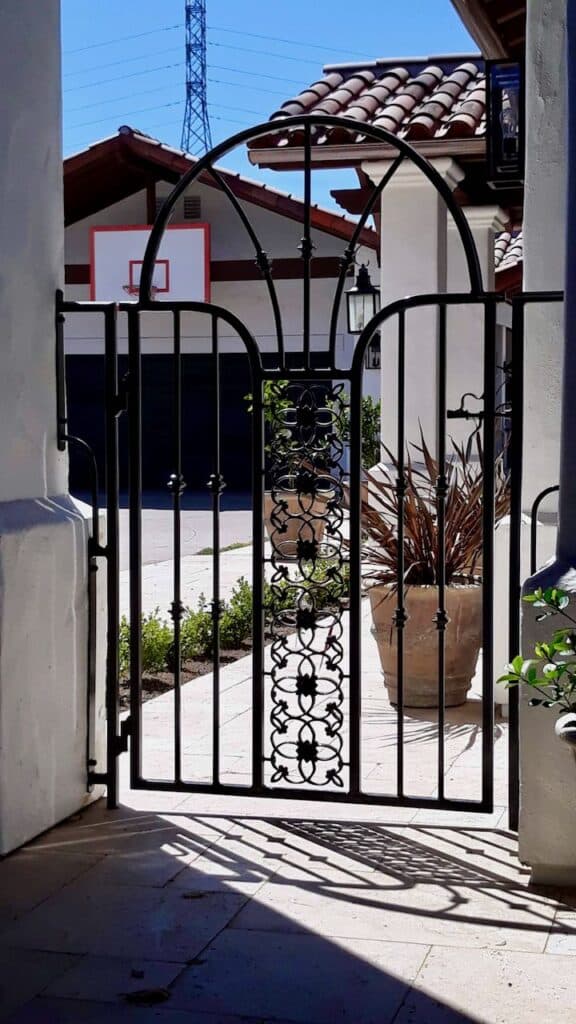

Swing gates vs. slide gates: how to choose
Swing gates (single or double leaf)
Best for: level driveways, wider openings, classic aesthetics
Pros:
- Traditional look (ranch, vineyard, estate styles)
- Often simpler fabrication
- Can be very quiet and smooth when designed right
Cons:
- Needs swing clearance (the gate must have room to arc)
- Sensitive to wind load
- Hinge/post loads can get massive on long/heavy leaves
- Slope can be tricky (requires lift hinges or special geometry)
Slide gates (cantilever or V-track)
Best for: sloped approaches, limited swing space, windier sites
Pros:
- No swing arc into driveway
- Often better in wind
- Works well on uneven approaches
- Great for wider openings
Cons:
- Needs side “runback” room (space parallel to the driveway)
- More components (track/rollers/cantilever hardware)
- Requires excellent alignment and foundation work
Rule of thumb:
If your driveway slopes, gets wind, or you hate the idea of a huge gate leaf “sailing” on hinges… you should be seriously looking at a slide gate.
Get a Quote for a Custom Steel Gate
Tell us your opening width, driveway slope, and whether you want swing or slide. We’ll recommend the right setup.
Hinge loads: the #1 cause of sagging gates
Gate sag is almost never “bad luck.” It’s usually physics—and the physics always wins.
What drives hinge load and long-term performance:
- Gate weight (steel frame + infill + decorative elements)
- Gate width (longer = more leverage)
- Hinge type and placement
- Post size and foundation
- How often it cycles (daily use vs occasional)
Design strategies that prevent sag:
- Proper hinge selection (bearing hinges for heavy gates)
- Correct hinge spacing and alignment
- Frame design that resists twist (not just a pretty rectangle)
- Real post engineering (steel posts and proper footings, not “hopecrete”)
- Accounting for automation forces (operators add stress)
If a gate is automated, hinge and post design become even more critical—operators don’t “gently persuade” a gate; they move it whether it wants to move or not.
Gate operators and automation: picking the right system
A gate operator should be chosen based on the gate design—not bolted on as an afterthought.
Common operator types
- Swing operators (linear arm or articulated arm)
- Slide operators (rack-and-pinion drive, chain drive, or cantilever setups)
What determines the right operator
- Gate weight and length
- Duty cycle (how many open/close cycles per day)
- Wind exposure (Paso Robles can get gusty)
- Power availability (120V, solar, battery backup)
- Safety requirements (photo eyes, loops, edges)
- Preferred access methods (keypad, remote, phone app, intercom)
Access control options (choose your “how do I get in?” stack)
- Keypad entry
- Remote transmitters
- Vehicle detection loops
- Phone/app-based entry (smart access)
- Intercom/call box
- Integration with home automation systems (where appropriate)
Pro tip: If you have guests, deliveries, or short-term rentals, access control usability matters as much as security. A gate that’s “secure” but annoying becomes the gate everyone leaves open.
Maintenance: keep it smooth, quiet, and reliable
A steel gate can be low-maintenance—but not zero-maintenance.
Basic maintenance checklist
- Inspect hinges/rollers for wear and play
- Lubricate moving components (per manufacturer spec)
- Check operator mounting and fasteners
- Keep slide gate tracks clean (if using track systems)
- Test safety devices (photo eyes, edges, loops)
- Touch up chips early to prevent corrosion creep
Powder coat helps a lot, but even powder coat can be defeated by neglected chips, salty coastal air (if you’re closer to the coast), or constant abrasion from dust and gravel.
Powder coat finishes: beauty + protection (when done right)
Powder coat is one of the best finishes for steel gates because it’s durable, uniform, and looks sharp. But the outcome depends heavily on prep.
What “done right” typically means:
- Thorough cleaning/degreasing
- Proper surface prep (blast profile if required)
- Quality primer (where specified)
- Correct cure time and thickness
Popular looks for Paso Robles properties
- Satin black (classic, hides dust)
- Dark bronze (warm and upscale)
- Charcoal/graphite (modern vineyard style)
- Textured finishes (great for fingerprints and minor scuffs)
If the gate is near sprinklers, landscaping, or gravel spray zones, choose a finish and design that anticipates that abuse.
HOA + rural driveway considerations (Paso Robles reality)
HOA considerations
- Height restrictions
- Style guidelines (picket spacing, color, ornamentation)
- Setback rules and visibility requirements
- Gate “solidness” limits (some HOAs dislike fully solid panels)
Best move: get CAD visuals early so you can submit something that doesn’t get kicked back.
Rural driveway considerations
- Long driveways: consider solar + battery backup
- Limited cell signal: access control may need alternatives
- Dust and gravel: choose hardware and finishes accordingly
- Big vehicles: plan turning radius, gate position, and clear opening width
- Fire access: consider emergency access requirements and smart placement
In rural builds, the gate is part of the whole approach experience—lighting, signage, and even pull-out space for visitors can make the system feel “premium” instead of “confusing.”
Options table: choose your gate package
| Option | Best For | Gate Type | Access Control | Finish | Notes |
|---|---|---|---|---|---|
| Essentials | Basic security + curb appeal | Swing or Slide | Keypad + remotes | Powder coat | Solid, simple, dependable |
| Premium | Daily use + guest access | Slide (often) | Keypad + app + loops | Powder coat + upgraded hardware | Smooth operation, higher convenience |
| Estate / Ranch | Large openings + rural properties | Slide (cantilever) | Intercom + app + backup power | Powder coat + corrosion strategy | Built for wind, dust, long drives |
What to ask your fabricator before committing
- Have you designed for hinge loads and long-term sag prevention?
- Do you handle CAD drawings and revisions?
- Can you coordinate operators, safety devices, and access control?
- What’s your recommended finish system for my environment?
- How do you plan for driveway slope and drainage?
- What’s included in commissioning and owner training?
A great gate feels invisible: it opens, it closes, it’s quiet, and nobody argues with it.
Get a Quote for a Custom Steel Gate
Tell us your opening width, driveway slope, and whether you want swing or slide. We’ll recommend the right setup.