




Tenant improvements move fast—until they don’t. The moment you add a mezzanine, modify a stair run, or install new guardrails, you’re no longer just “freshening up a space.” You’re touching structural loads, egress, and life-safety code. That’s where steel shines: it’s strong, space-efficient, and buildable on tight timelines—but only if it’s designed, permitted, and installed correctly.
If you’re planning a buildout in San Luis Obispo County, this guide walks through how steel mezzanines, stairs, and guarding typically fit into a commercial TI—including engineering load calcs, the permit path, fire code clearance considerations, and finish options that actually hold up in retail and food environments.
Why steel is a smart move for commercial tenant improvements
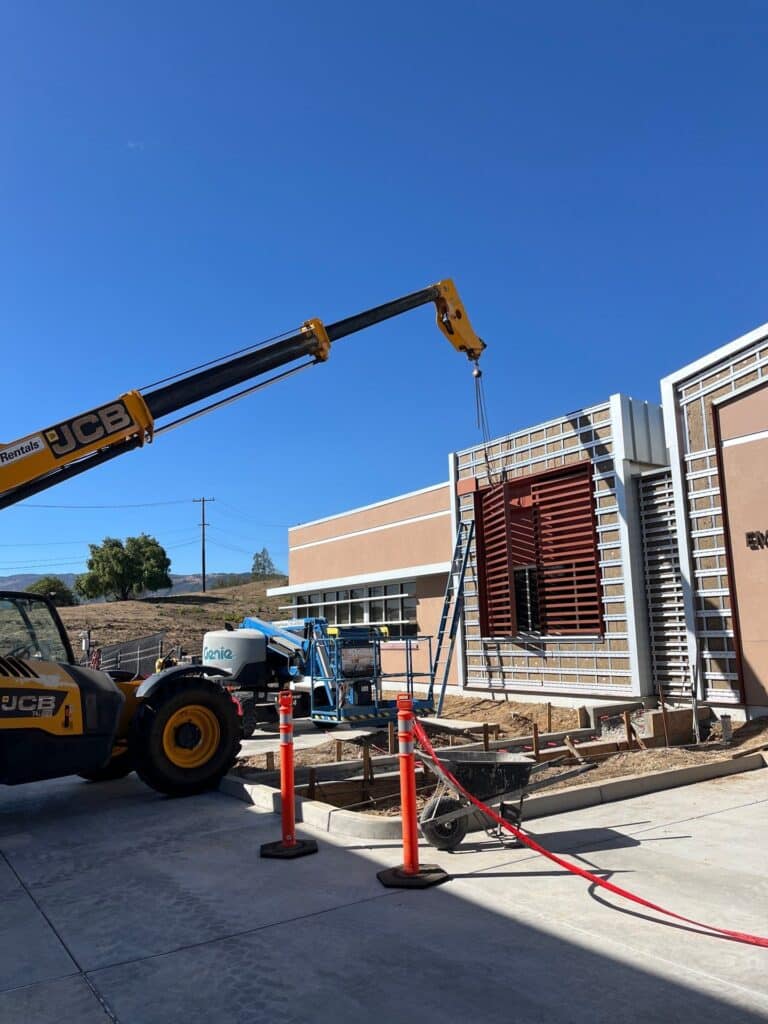
Steel is the “Swiss Army knife” of TI work: you can add usable square footage, solve circulation issues, and protect people and property—without rebuilding the entire shell.
Common TI upgrades where steel is a great fit:
- Mezzanines for storage, office lofts, or light production space
- Interior or exterior stairs to meet circulation and egress needs
- Guardrails and handrails for elevated surfaces, landings, ramps, and open edges
- Equipment platforms (HVAC access, brew systems, kitchen platforms, etc.)
- Bollards/barriers for back-of-house protection and loading areas
Steel systems also tend to be:
- Faster to fabricate offsite and install onsite
- Easier to modify or expand later
- Cleaner and more precise when you need tight tolerances
Mezzanines: extra square footage without moving walls
A mezzanine can be one of the highest-ROI TI upgrades—especially for retail stockrooms, storage-heavy businesses, and hybrid retail/office concepts.
Typical mezzanine use cases
- Retail back-of-house storage
- Inventory overstock above stockrooms
- Small office lofts for admin/ops
- Light-duty work platforms (case-by-case)
The big thing people miss: loads
A mezzanine is structural. It must be designed for the intended use, and that’s not a guess—it’s a calculation.
Load calcs with your engineer
You (or your architect/GC) will want a licensed engineer to determine:
- Live loads (people, storage, movable items)
- Dead loads (steel weight, decking, finishes)
- Point loads (equipment, shelving, safes, etc.)
- Connections (base plates, anchors, bolt patterns, weld specs)
- Existing slab/footings capacity (especially in older buildings)
Practical tip: if the client says, “It’s just for light storage,” your engineer will ask, “Light compared to what?” Storage loads add up fast—and “later” is when mezzanines get overloaded.
Stairs: function, flow, and code compliance (all at once)
Stairs in tenant improvements often fall into one of two buckets:
- Aesthetic + circulation (a feature stair to a mezzanine or loft)
- Egress (life-safety critical, usually more restrictive)
Both require close attention to geometry and code requirements—because stairs are where projects go to die when they’re treated like décor.
What typically drives stair design
- Clear width requirements (especially for egress)
- Rise/run geometry and landings
- Headroom and overhead obstructions
- Relationship to doors, corridors, and exit paths
- Handrail/guard requirements and mounting details
Field verification matters. In TI work, existing conditions are rarely “square.” A site measure before final fabrication prevents the classic stair problem: “It fit perfectly… in CAD.”
Guarding & handrails: safety systems, not accessories
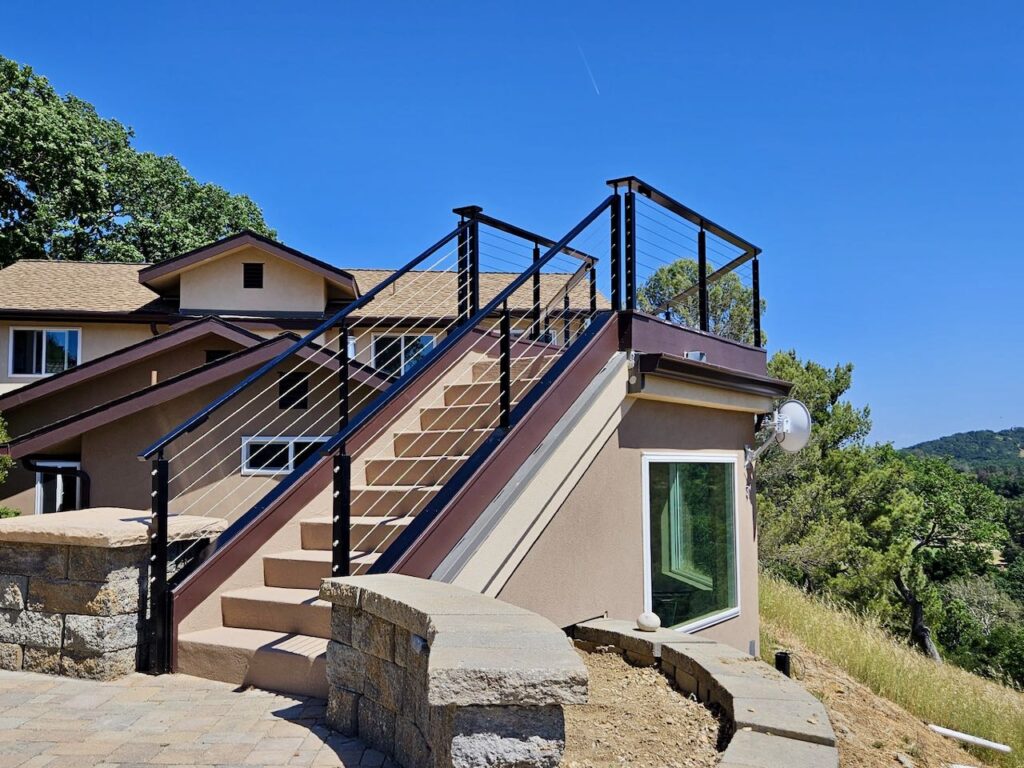
Guardrails and handrails are often the last thing people want to talk about—and the first thing an inspector will flag.
Where guarding commonly shows up in TIs:
- Mezzanine edges and open sides
- Stair landings
- Ramps and elevated walkways
- Open floor edges in modern retail designs
- Exterior decks and balconies (if part of the leasehold scope)
Key considerations:
- Guard height and opening limitations
- Handrail continuity and returns
- Mounting method (top mount vs fascia mount vs embedded posts)
- Compatibility with finishes and cleaning needs (especially food)
Guarding can still look great—steel cable rail, pickets, perforated panels, or minimalist plate systems—but it has to meet life-safety requirements first.
Permit path: plan for it early, or pay for it later
In most commercial TIs, a mezzanine or new stair/guard system triggers plan review. The exact path depends on scope and jurisdiction, but here’s the “typical reality”:
What you’ll likely need
- Engineered drawings and calculations
- Fabrication drawings (shop drawings) aligned with stamped plans
- Anchoring details and specs
- Special inspection requirements (varies by project and authority)
Timeline reality check
Permit review can become the pacing item. The fastest way to keep momentum is to:
- Engage engineering early
- Confirm the intended use (storage vs office vs assembly)
- Coordinate with the architect/GC on egress and occupancy impacts
- Avoid redesign loops caused by late MEP or fire clearance conflicts
Fire code clearance considerations (don’t get surprised)
Fire and life-safety issues can show up quickly when you add elevated structures.
Common clearance/coordination items to watch:
- Egress paths: stairs and mezzanines cannot compromise exit routes
- Sprinklers: you may need to modify coverage beneath or above a mezzanine
- Fire alarm devices: horns/strobes/smoke detection may need relocation or additions
- Headroom and projections: low beams, ducts, and signage can create conflicts
- Rated assemblies: penetrations or attachments can affect rated walls/ceilings
This is why early coordination between engineer + architect + fire protection is worth its weight in… steel.
Finish options for retail and food environments
Steel in commercial spaces gets touched, cleaned, bumped, and exposed to humidity, chemicals, and spills. Finish choice isn’t just cosmetic—it’s maintenance, longevity, and sometimes compliance.
Common finish options
1) Powder coating
- Clean, durable, and consistent color
- Great for retail stairs/rails and customer-facing features
- Choose a finish level (matte/satin/gloss) based on fingerprints and cleaning
2) High-performance paint systems (epoxy/urethane)
- Often used in industrial and back-of-house areas
- Can be specified for chemical resistance
- Good when you want onsite touch-ups to be straightforward
3) Galvanizing
- Excellent corrosion resistance, especially in coastal or exterior exposures
- Not always the look clients want indoors—but great for exterior stairs/guarding
4) Stainless steel (select applications)
- Popular in food-related environments for cleanability and corrosion resistance
- Costs more, but can pay off where sanitation and washdown are routine
Food environment considerations
If the TI is for food service (kitchen, prep, brewery, etc.), prioritize:
- Smooth, cleanable surfaces (avoid grime-catching details)
- Smart transitions at base plates and connections
- Layout that doesn’t create impossible-to-clean “steel dust shelves”
How a commercial welding fabricator should plug into your TI team
For TIs, the best outcomes happen when fabrication is treated as part of the design process—not a late-stage “make it match this sketch” moment.
A good TI workflow looks like:
- Site measure + scope confirmation
- Engineer sets loads and connection requirements
- Fabricator produces shop drawings aligned to stamped plans
- Fabrication happens while the site is being prepped
- Install is coordinated with flooring, MEP, sprinklers, and inspections
That coordination is where time gets saved.
Choosing a partner for commercial welding in San Luis Obispo County
If you’re looking for commercial welding in San Luis Obispo, ask potential fabricators questions that TI projects actually care about:
- Can you coordinate shop drawings with engineering and permit plans?
- Do you field verify before final fabrication?
- Are you experienced with mezzanine/stair/guard packages specifically?
- How do you handle schedule constraints and phased installs?
- Can you recommend finish systems based on environment and use?
Tenant improvements are basically controlled chaos. Your steel package shouldn’t add to it.
Next steps: get your steel scope TI-ready
If you’re early in planning:
- Define mezzanine use (storage vs office vs other)
- Identify where stairs and guarding impact egress and circulation
- Start engineering load calcs early
- Confirm finish requirements based on cleaning and traffic
- Build permit time into the schedule from day one
If you’re mid-project and things are shifting (because they always do), lock in:
- Final field dimensions
- Connection/anchor details
- Fire protection and clearance coordination